Is Barzani Responsible for Mass Murder and Rape of Yazidi Kurdish?
08-13-2014
Tuesday, August 19, 2014
Friday, August 15, 2014
Seats still available for new course, Never Again! Memory and Politics after Genocide
SOC 4090 and GLOS 4910
Tue/Th 1.00 to 2.30 (FALL 2014) /Room 15 Humphrey Center
Instructor: Alejandro Baer, Associate Professor Sociology, Feinstein Chair and Director of the Center for Holocaust and Genocide Studies
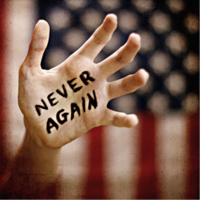
Course overview: This course focuses on the social repercussions and political consequences of large-scale political violence, such as genocide, crimes against humanity and war crimes. How do individuals, communities and societies come to terms with these atrocities? How do successor regimes balance the demands for justice with the need for peace and reconciliation? How is public memory of the atrocities constructed?
Section I provides an overview of the basic concepts and themes of this class: defining mass violence, collective memory and forgetting in post-atrocity contexts, and transitional justice. In Section II we will look at memory of the Holocaust among descendants of victims and descendants of perpetrators and its impact on the way other communities shape and represent their memories of mass violence and victimhood, i.e. their specific demands, symbolic politics and judicial strategies. In Section III we will address cases from around the globe and different historical settings, including the legacies of State terror in Latin America, the aftermath of Stalinist mass violence in Eastern Europe and American Indian struggles for memory and justice.
We will also examine public remembrance projects such as monuments and museums, film and television series, visual art and other initiatives which operate in conjunction or in tension with legal and political procedures (tribunals, truth commissions, reparations, etc.) and are often initiated by human rights NGOs, victim organizations, intellectuals and artists.
Course Format: This course will be conducted as a combined lecture and discussion course. This basic format will be supplemented by occasional in-class exercises.
Course Requirements: In addition to regular attendance and active participation in discussions, students are required to complete short in-class writing based on the readings, write two 4-5 page, double spaced, critical essays, complete one mid-term exam and a end of semester essay.
Visit One Stop to register.
Tue/Th 1.00 to 2.30 (FALL 2014) /Room 15 Humphrey Center
Instructor: Alejandro Baer, Associate Professor Sociology, Feinstein Chair and Director of the Center for Holocaust and Genocide Studies
Course overview: This course focuses on the social repercussions and political consequences of large-scale political violence, such as genocide, crimes against humanity and war crimes. How do individuals, communities and societies come to terms with these atrocities? How do successor regimes balance the demands for justice with the need for peace and reconciliation? How is public memory of the atrocities constructed?
Section I provides an overview of the basic concepts and themes of this class: defining mass violence, collective memory and forgetting in post-atrocity contexts, and transitional justice. In Section II we will look at memory of the Holocaust among descendants of victims and descendants of perpetrators and its impact on the way other communities shape and represent their memories of mass violence and victimhood, i.e. their specific demands, symbolic politics and judicial strategies. In Section III we will address cases from around the globe and different historical settings, including the legacies of State terror in Latin America, the aftermath of Stalinist mass violence in Eastern Europe and American Indian struggles for memory and justice.
We will also examine public remembrance projects such as monuments and museums, film and television series, visual art and other initiatives which operate in conjunction or in tension with legal and political procedures (tribunals, truth commissions, reparations, etc.) and are often initiated by human rights NGOs, victim organizations, intellectuals and artists.
Course Format: This course will be conducted as a combined lecture and discussion course. This basic format will be supplemented by occasional in-class exercises.
Course Requirements: In addition to regular attendance and active participation in discussions, students are required to complete short in-class writing based on the readings, write two 4-5 page, double spaced, critical essays, complete one mid-term exam and a end of semester essay.
Section I provides an overview of the basic concepts and themes of this class: defining mass violence, collective memory and forgetting in post-atrocity contexts, and transitional justice. In Section II we will look at memory of the Holocaust among descendants of victims and descendants of perpetrators and its impact on the way other communities shape and represent their memories of mass violence and victimhood, i.e. their specific demands, symbolic politics and judicial strategies. In Section III we will address cases from around the globe and different historical settings, including the legacies of State terror in Latin America, the aftermath of Stalinist mass violence in Eastern Europe and American Indian struggles for memory and justice.
We will also examine public remembrance projects such as monuments and museums, film and television series, visual art and other initiatives which operate in conjunction or in tension with legal and political procedures (tribunals, truth commissions, reparations, etc.) and are often initiated by human rights NGOs, victim organizations, intellectuals and artists.
Course Format: This course will be conducted as a combined lecture and discussion course. This basic format will be supplemented by occasional in-class exercises.
Course Requirements: In addition to regular attendance and active participation in discussions, students are required to complete short in-class writing based on the readings, write two 4-5 page, double spaced, critical essays, complete one mid-term exam and a end of semester essay.
Visit One Stop to register.

Thursday, August 7, 2014
Wednesday, August 6, 2014
Tuesday, August 5, 2014
Registration open for Holocaust and Genocide related courses
Registration for University of Minnesota's fall 2014 semester is now open with a number of courses that fall within the Center's interdisciplinary approach to the study of the Holocaust and genocide.
The following courses are designed to provide direct and comprehensive instruction on the topic of the Holocaust, as well as the social, memorial and political impact of genocides:
History 3729, Nazi Germany and Hitler's Europe
Professor Gary Cohen
Comprehensive exploration of Third Reich. Students will examine How the Nazis came to power, transformations of 1930s, imposition of racial politics against Jews/others, nature of total war. Students read historical accounts, memoirs, state documents, view films.
Global Studies 4910, "Never Again!" Memory and Politics After Genocide
Professor Alejandro Baer
This course focuses on the aftermath of large-scale political violence. How do individuals, communities and societies come to terms with these atrocities? How do successor regimes balance the demands for justice with the need for peace and reconciliation? How is public memory of the atrocities constructed?
For an extended list of multi-disciplinary courses that present contextual studies of conflicts, human rights violations, power dynamics, social memory and transformation that are mirrored in the Holocaust and other genocides, please see the Fall 2014 Courses List.pdf
To register please visit the University of Minnesota's One Stop Home.
Saturday, August 2, 2014
Subscribe to:
Posts (Atom)