In his public address on Sunday evening April 15, "Is There an Anti-Jewish Bias in Today's University?" Professor Alvin Rosenfeld discussed how many campuses have become hospitable to certain political and ideological currents of thought that issue in actions and statements that can be seen as hostile to many Jewish students and professors.
Rosenfeld's appearance was in conjunction with the symposium, Betrayal of the Humanities: The University During the Third Reich. The symposium took place on April 15 and 16 in Mondale Hall. The symposium examined the moral role of the university in today's society while exploring the mutation of academic ideals under National Socialism, when the German university system promoted Nazi ideology and helped the state eliminate its diverse community. Fourteen scholars from across the U.S. and abroad, examined core academic disciplines, including anthropology, philosophy, classics, Assyriology, theology, law, and music. A publication of the proceedings is planned.
You can view the talk by clicking here or visiting the CHGS YouTube channel at http://www.youtube.com/user/CHGSumn.
More lectures on CHGS YouTube channel
The CHGS YouTube channel is home to all of our recent lectures over the past year, including internationally acclaimed Holocaust scholar Deborah Lipstadt.
Showing posts with label anti-Semitism. Show all posts
Showing posts with label anti-Semitism. Show all posts
Saturday, June 30, 2012
Wednesday, April 25, 2012
The Conceptual Jew: Reflections on Arendt and Adorno's Post-Holocaust Theories of Anti-Semitism
A Lecture by: Jonathan Judaken, Rhodes College
Wednesday, April 25, 2012
Room 710 Social Sciences Building
4:00 p.m.
Professor Judaken will reconstruct the very different theoretical paradigms of the interactionist and the socio-psychoanalytic that Hannah Arendt and Theodor Adorno developed to understand anti-Semitism.
Despite their differences, Arendt and Adorno shared a common problem that riddled their respective understandings. Both depended upon elevating what he calls the conceptual Jew to the centerpiece of their paradigms.
The conceptual Jew provided at once the critical energy for Arendt and Adorno's theoretical reflections on anti-Semitism, but also resulted in each of them reiterating stereotypical constructions of Jews and Judaism. In each case, these typologies of Jews prove quite similar.
The hypothesized and essentialized conception of Jews that wends its way into their theorizing resulted in both cases in their insights as well as their blindnesses when it came to their respective analyses of what Adorno preferred to call "the anti-Semitic question."
Jonathan Judaken is the newly appointed Spence L. Wilson Chair in Humanities at Rhodes College. He recently served as the Dunavant Professor of Modern European Cultural and Intellectual History at the University of Memphis. His research focuses on the patterns that underpin prejudice and the underlying assumptions that animate tolerance, values about the nation, race, gender, epistemology, and colonization.
Sponsored by the Center for Holocaust and Genocide Studies and the Center for Jewish Studies.
Flier: Judaken.pdf
Wednesday, April 25, 2012
Room 710 Social Sciences Building
4:00 p.m.
Professor Judaken will reconstruct the very different theoretical paradigms of the interactionist and the socio-psychoanalytic that Hannah Arendt and Theodor Adorno developed to understand anti-Semitism.
Despite their differences, Arendt and Adorno shared a common problem that riddled their respective understandings. Both depended upon elevating what he calls the conceptual Jew to the centerpiece of their paradigms.
The conceptual Jew provided at once the critical energy for Arendt and Adorno's theoretical reflections on anti-Semitism, but also resulted in each of them reiterating stereotypical constructions of Jews and Judaism. In each case, these typologies of Jews prove quite similar.
The hypothesized and essentialized conception of Jews that wends its way into their theorizing resulted in both cases in their insights as well as their blindnesses when it came to their respective analyses of what Adorno preferred to call "the anti-Semitic question."
Jonathan Judaken is the newly appointed Spence L. Wilson Chair in Humanities at Rhodes College. He recently served as the Dunavant Professor of Modern European Cultural and Intellectual History at the University of Memphis. His research focuses on the patterns that underpin prejudice and the underlying assumptions that animate tolerance, values about the nation, race, gender, epistemology, and colonization.
Sponsored by the Center for Holocaust and Genocide Studies and the Center for Jewish Studies.
Flier: Judaken.pdf

Tuesday, April 17, 2012
This Sunday, April 15-"Is There an Anti-Jewish Bias in Today's University?"
Alvin Rosenfeld, Irving M. Glazer Chair in Jewish Studies; Director, Institute for the Study of Contemporary Anti-Semitism (Indiana University)
Sunday, April 15, 2012
7:30p.m.
Cowles Auditorium
The Humphrey School of Public Affairs
In his public address, "Is There an Anti-Jewish Bias in Today's University?" Professor Alvin Rosenfeld will discuss how many of our campuses have become hospitable to certain political and ideological currents of thought that issue in actions and statements hostile to many Jewish students and professors. A review of contemporary debates about two issues of particular concern to Jews--the Holocaust and the State of Israel--suggests that we may be witnessing the emergence of some new versions of the "Jewish Question."
Alvin H. Rosenfeld's appearance is in conjunction with the Symposium, Betrayal of the Humanities: The University During the Third Reich. Sunday, April 15 and 16, at Mondale Hall.
Professor Rosenfeld is the author of numerous scholarly and critical articles on American poetry, Jewish writers, and the literature of the Holocaust. His most recent study, The End of the Holocaust, contends that the proliferation of books, films, television programs, museums, and public commemorations related to the Holocaust has, perversely, brought about a diminution of its meaning and a denigration of its memory.
Sunday, April 15, 2012
7:30p.m.
Cowles Auditorium
The Humphrey School of Public Affairs
In his public address, "Is There an Anti-Jewish Bias in Today's University?" Professor Alvin Rosenfeld will discuss how many of our campuses have become hospitable to certain political and ideological currents of thought that issue in actions and statements hostile to many Jewish students and professors. A review of contemporary debates about two issues of particular concern to Jews--the Holocaust and the State of Israel--suggests that we may be witnessing the emergence of some new versions of the "Jewish Question."
Alvin H. Rosenfeld's appearance is in conjunction with the Symposium, Betrayal of the Humanities: The University During the Third Reich. Sunday, April 15 and 16, at Mondale Hall.
Professor Rosenfeld is the author of numerous scholarly and critical articles on American poetry, Jewish writers, and the literature of the Holocaust. His most recent study, The End of the Holocaust, contends that the proliferation of books, films, television programs, museums, and public commemorations related to the Holocaust has, perversely, brought about a diminution of its meaning and a denigration of its memory.
Thursday, September 1, 2011
New criticisms imply that Jews and Israel are manipulating the Holocaust for political advantage
Michigan professor to discuss 'latest thing' in anti-Semitism
American Jewish World article featuring Dr. Gabriel Noah Brahm, Jr.
Brahm's lecture, "Holocaust Envy & "Enjoyment" of the Holocaust
The "latest Thing" in anti-Semitism will take place on campus. 9-15-2011.
American Jewish World article featuring Dr. Gabriel Noah Brahm, Jr.
Brahm's lecture, "Holocaust Envy & "Enjoyment" of the Holocaust
The "latest Thing" in anti-Semitism will take place on campus. 9-15-2011.
Thursday, April 21, 2011
The transcript of Meïr Waintrater's lecture "You, Zionist!" Uses and Misuses of the Z-Word in Current Political Discourse is now available.
 On March 29, 2011 Meïr Waintrater, editor-in-chief, L'Arche spoke at the St. Paul JCC about the systematic use of the words "Zionism" and "Zionist" where the words "Israel" and "Israelis" would be expected by various individuals who are hostile to Israel. Waintrater contrasted the use of the word "Zionist" in France, Great Britain and the United States, suggesting that while criticism of Israel should not be reduced to Jew-hatred, the "anti-Zionist" argument is often used to legitimize genuine anti-Semitism.
To read the transcript of that lecture please click on the PDF file below.
Uses and Misuses of the ZWord in Current Political Discourse.pdf
Meïr Waintrater was born in 1947 in Paris, and lived and worked as an economist and journalist at various institutions in Israel between 1973 and 1988. As editor-in-chief of L'Arche, he is a major commentator on questions of Jewish importance in Europe and France.
Monday, April 4, 2011
Indiana U. parley tackles 'post-Holocaust anti-Semitism'
Bruno Chaouat, CHGS director, presented his paper "The Demonization of Israel in France: Literary and Ideological Perversions" as part of the conference.
Indiana U. parley tackles 'post-Holocaust anti-Semitism'
By BENJAMIN WEINTHAL
04/03/2011
The Jerusalem Post
International conference led by anti-Semitism scholar Prof. Alvin Rosenfeld will also discuss questions about anti-Jewish hostility within Israel.
Rosenfeld told The Jerusalem Post ahead of the opening that, "We're living at a time of heightened anti-Semitism, but today's anti-Semitism is not well understood. Scholars have given a great deal of attention to earlier forms of Christian religious anti-Semitism and to Nazi-style racial anti-Semitism, culminating in the Holocaust.
Read full article here.
Indiana U. parley tackles 'post-Holocaust anti-Semitism'
By BENJAMIN WEINTHAL
04/03/2011
The Jerusalem Post
International conference led by anti-Semitism scholar Prof. Alvin Rosenfeld will also discuss questions about anti-Jewish hostility within Israel.
Rosenfeld told The Jerusalem Post ahead of the opening that, "We're living at a time of heightened anti-Semitism, but today's anti-Semitism is not well understood. Scholars have given a great deal of attention to earlier forms of Christian religious anti-Semitism and to Nazi-style racial anti-Semitism, culminating in the Holocaust.
Read full article here.
Friday, March 4, 2011
"You, Zionist!" Uses and Misuses of the Z-Word in Current Political Discourse
 Meïr Waintrater, Editor-in-Chief, L'Arche
Tuesday, March 29, 2011
7:00 p.m.
St. Paul JCC
1375 St. Paul Avenue
Saint Paul, MN 55116
For several years, within circles hostile to Israel, there has been a systematic use of the words "Zionism" and "Zionist" where the words "Israel" and "Israelis" would be expected. Meïr Waintrater, French journalist and editor-in-chief of the Jewish magazine L'Arche, will contrast the use of the word "Zionist" in France, Great Britain and the United States. Waintrater will suggest that while criticism of Israel should not be reduced to Jew-hatred, the "anti-Zionist" argument is often used to legitimize genuine anti-Semitism.
Meïr Waintrater was born in 1947 in Paris, and lived and worked as an economist and journalist at various institutions in Israel between 1973 and 1988. As editor-in-chief of L'Arche, he is a major commentator on questions of Jewish importance in Europe and France. France is home to one of the largest Jewish communities, while at the same time being home to one of the largest Muslim populations in Western Europe. Waintrater's perspective is crucial to understanding the tensions between the two communities, as well as the recent increase in French Jewish immigration to Israel which can be seen as a consequence of a new trend in anti-Semitism.
Co-sponsors: Jewish Community Relations Council (JCRC), St. Paul JCC,
University of Minnesota: Center for Jewish Studies, School of Journalism and Mass Communication.
Tuesday, February 1, 2011
Holocaust and Genocide News and Articles
Tuesday, February 1, 2011
Muslim dignitaries pay their respects at Auschwitz
(AP) - 2-1-2011
OSWIECIM, Poland (AP) -- In a bid to fight anti-Semitism and bridge cultural rifts, a large delegation of Muslim dignitaries visited Auschwitz on Tuesday to pay tribute to the millions of Jews and others who were systematically killed in the Holocaust.
Read full article
Austrian Jews press charges over 'anti-Semitic' Turkish film on Gaza flotilla
Haaretz,com
2-1-2011
By DPA
Politicians and Jewish groups in Austria and Germany criticized action film 'Valley of the Wolves - Palestine' ahead of its release on Holocaust Memorial Day.
Read full article
Khmer Rouge suspects seek release ahead of trial
By Suy Se (AFP) - 1-31-2011
PHNOM PENH -- Three top Khmer Rouge leaders made a rare joint appearance before Cambodia's UN-backed war crimes court on Monday to seek release from custody while they await trial for genocide.
Read full article
Holocaust survivor shared message of tolerance with thousands:Minneapolis Star Tribune 1-30-2011
Ella Weiss, 'strong-willed' Auschwitz survivor: Minneapolis Star Tribune 1-30-2011
Preserving a symbol of evil: Boston Globe 1-30-2011
A Vanished World: Panorama by H.G. Adler: New York Times Review of Books 1-28-2011
Muslim dignitaries pay their respects at Auschwitz
(AP) - 2-1-2011
OSWIECIM, Poland (AP) -- In a bid to fight anti-Semitism and bridge cultural rifts, a large delegation of Muslim dignitaries visited Auschwitz on Tuesday to pay tribute to the millions of Jews and others who were systematically killed in the Holocaust.
Read full article
Austrian Jews press charges over 'anti-Semitic' Turkish film on Gaza flotilla
Haaretz,com
2-1-2011
By DPA
Politicians and Jewish groups in Austria and Germany criticized action film 'Valley of the Wolves - Palestine' ahead of its release on Holocaust Memorial Day.
Read full article
Khmer Rouge suspects seek release ahead of trial
By Suy Se (AFP) - 1-31-2011
PHNOM PENH -- Three top Khmer Rouge leaders made a rare joint appearance before Cambodia's UN-backed war crimes court on Monday to seek release from custody while they await trial for genocide.
Read full article
Holocaust survivor shared message of tolerance with thousands:Minneapolis Star Tribune 1-30-2011
Ella Weiss, 'strong-willed' Auschwitz survivor: Minneapolis Star Tribune 1-30-2011
Preserving a symbol of evil: Boston Globe 1-30-2011
A Vanished World: Panorama by H.G. Adler: New York Times Review of Books 1-28-2011
Tuesday, October 19, 2010
Jean-Luc Godard, anti-Semite?
Bruno Chaouat, director
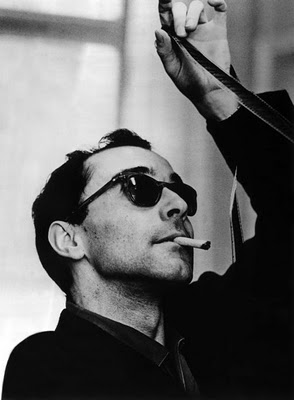
It was recently announced by the Academy of Motion Picture Arts and Sciences that Jean-Luc Godard, the Swiss-French filmmaker, will receive an honorary Oscar at this year's ceremony (see article from Jewish Journal posted by CHGS on October 16th, 2010). With this announcement came articles, blog posts and op-eds referring to the filmmaker's real or alleged anti-Semitism.
It is important for the world of scholarship to connect with current events, and we post these articles in order to examine these events with a sense of nuance and depth that the complexity of culture and history requires. While journalism often makes the complexity of the world accessible at the cost of simplifying it, the mission of an academic center such as ours is to approach this complexity with rigor, scientific and intellectual integrity and without sensationalizing.
It is particularly timely that Professor Philip Watts from Columbia University will speak in April about Godard, WWII, the Jews and the Holocaust at CHGS's lecture series, "Alternative Narratives or Denial?" Professor Watts will examine portions of Godard's work and discuss how his history may have shaped and informed his cinematographic choices which have led to the anti-Semitic charges.
We look forward to this exchange, and will continue to look at current events and provide a platform to lead us into deeper inquiry beyond the headlines.

It was recently announced by the Academy of Motion Picture Arts and Sciences that Jean-Luc Godard, the Swiss-French filmmaker, will receive an honorary Oscar at this year's ceremony (see article from Jewish Journal posted by CHGS on October 16th, 2010). With this announcement came articles, blog posts and op-eds referring to the filmmaker's real or alleged anti-Semitism.
It is important for the world of scholarship to connect with current events, and we post these articles in order to examine these events with a sense of nuance and depth that the complexity of culture and history requires. While journalism often makes the complexity of the world accessible at the cost of simplifying it, the mission of an academic center such as ours is to approach this complexity with rigor, scientific and intellectual integrity and without sensationalizing.
It is particularly timely that Professor Philip Watts from Columbia University will speak in April about Godard, WWII, the Jews and the Holocaust at CHGS's lecture series, "Alternative Narratives or Denial?" Professor Watts will examine portions of Godard's work and discuss how his history may have shaped and informed his cinematographic choices which have led to the anti-Semitic charges.
We look forward to this exchange, and will continue to look at current events and provide a platform to lead us into deeper inquiry beyond the headlines.
Monday, October 11, 2010
Is Jean-Luc Godard an anti-Semite?
CHGS will explore this question more in depth during our lecture series "Alternative Narratives or Denial?" in March and April of 2011. check our web site for updates and information coming soon.
October 6, 2010
Is Jean-Luc Godard an anti-Semite?
Jean-Luc Godard to get honorary Oscar, questions of anti-Semitism remain
By Tom Tugend
JewishJournal.com
Hollywood's Academy of Motion Picture Arts and Sciences has announced that it will bestow an honorary Oscar on iconic Swiss-French filmmaker Jean-Luc Godard on Nov. 13.The announcement has raised a new question and revived an old one. First, will Godard show up to accept the award? Second, is he an anti-Semite?
Both questions can be answered with a categorical "maybe yes or maybe no." Godard, who will mark his 80th birthday in December, is one of the originators, and among the last survivors, of the French New Wave cinema, which he helped kick-start in 1960 with "Breathless," still his best-known work.
He and his cohorts, among them Francois Truffaut and Eric Rohmer, rebelled against the traditional French movie, and later against all things Hollywood.
The New Wave elevated the role of the director as the sole auteur of a movie and viewed film as a fluid audiovisual language, freed of the constraints of formal story lines, plot, narration and sequence.
As Godard put it, "I believe a film should have a beginning, a middle and an end, but not necessarily in that order."
To a small coterie of cinephiles and most professional film critics, especially in Europe, Godard is considered the ultimate cinematic genius. To others, his films often seem insufferably opaque and incomprehensible.
In the 50 years since his film debut, Godard has proven his vigor and inventiveness in 70 features and is credited with strongly influencing such American directors as Martin Scorsese, Quentin Tarantino and Steven Soderbergh.
Godard's long career has been marked by constant artistic disputes and charges of anti-Semitism and anti-Zionism, as noted in three biographies: "Godard: A Portrait of the Artist at 70" (2003) by American professor Colin MacCabe; "Everything Is Cinema: The Working Life of Jean-Luc Godard" (2008) by Richard Brody, an editor and writer for the New Yorker; and "Godard" by film historian Antoine de Baecque.
The last was published in March in French and is not easily available. Material used in this article was drawn from reviews and analyses of the book.
The early seeds of Godard's alleged anti-Semitism and acknowledged anti-Zionism may have been planted in the home of his affluent Swiss-French Protestant family.
In a 1978 lecture in Montreal, he spoke of his family's own political history as World War II "collaborators" who rooted for a German victory, and of his grandfather as "ferociously not even anti-Zionist, but he was anti-Jew; whereas I am anti-Zionist, he was anti-Semitic."
Godard validated his anti-Israel credentials in 1970 by filming "Until Victory," depicting the "Palestinian struggle for independence," partially bankrolled by the Arab League.
The project was eventually aborted, but Godard used some of the footage in his 1976 documentary, "Ici et ailleurs" ("Here and Elsewhere"), contrasting the lives of two families -- one French and one Palestinian.
In it, Godard inserted alternating blinking images of Golda Meir and Adolf Hitler, and suggested, in reference to the 1972 Munich Olympics massacre, that "before every Olympic finale, an image of a Palestinian [refugee] camp should be broadcast."
Biographer Brody, like the other authors, is an ardent admirer of Godard the artist, but he notes that in the filmmaker's later work, "Godard's obsession with living history ... has brought with it a troubling set of idées fixes, notably regarding Jews and the United States."
Godard has been able to combine both targets in his attacks on Hollywood, and, of course, the Jews who run it.
He has always been obsessed by the Holocaust, and after the 1993 release of "Schindler's List," the film and its director, Steven Spielberg, became Godard's favorite whipping boys. As in many of his attacks on Hollywood, it is at times difficult to discern whether Godard's hostility is based on artistic differences or anti-Semitism, or a bit of each.
The leitmotif running through Godard's own work is the superiority of "images" as against "texts" or narratives, or, as he puts it, "the great conflict between the seen and the said."
He faults, for instance, Claude Lanzmann's monumental nine-hour film, "Shoah," for its use of personal narratives by survivors and others, and proposes that the Holocaust can only be truly represented by showing the home life of one of the concentration camp guards.
Who is to blame for the Jewish preference of text over image? It is Moses, Godard's "greatest enemy," who "saw the bush in flames and who came down from the mountain and didn't say, 'This is what I saw,' but, 'Here are the tablets of the law.' "
For the untutored layman, unfamiliar with the methods and passions of movie making, this and other Godard pronouncements can take on an Alice-in-Wonderland quality.
A key may be found in a recent London Sunday Times story, in which a reporter interviewed one of Godard's oldest friends, a retired geology professor.
"He [Godard] is on a different level from the rest of us, somewhere between genius and completely round the bend," the professor explained.
Artistic differences aside, there are disturbing instances of Godard's anti-Semitism, particularly directed against some of his closest collaborators. According to the three biographers, at one point Godard called producer Pierre Braunberger, an early supporter of the New Wave filmmakers, a "sale Juif " (filthy Jew).
In another case, when longtime collaborator Jean-Pierre Gorin requested some back pay, Godard noted, "Ah, it's always the same, Jews call you when they hear a cash register opening."
When this reporter submitted some of Godard's anti-Semitic utterances to the Motion Picture Academy and requested comments, the request prompted the following written response:
"The Academy is aware that Jean-Luc Godard has made statements in the past that some have construed as anti-Semitic. We are also aware of detailed rebuttals to that charge. Anti-Semitism is of course deplorable, but the Academy has not found the accusations against M. Godard persuasive.
"The Academy's Honorary Awards are presented in recognition of an individual's extraordinary contributions to the art of the motion picture. The organization intends to bestow an honorary Oscar on M. Godard at its second annual Governors Awards on November 13th."
After a follow-up request as to the source of the "detailed rebuttals," an Academy spokeswoman cited a 2009 article in the Canadian magazine Cinema Scope by Bill Krohn, Hollywood correspondent for the influential French film magazine Cahiers du Cinema, to which Godard and many of the early New Wave directors contributed as film critics.
Krohn took on Brody's biography and accused its author of ideological simplification, biographical reductivism, guilt by association, misinterpretations, hurt self-esteem following a snub by Godard and, all in all, of perpetrating "a hatchet job disguised as a celebration of Godard's genius."
Krohn's critique is quite diffuse and short on specifics, but in one concrete instance he illustrates that the same words can be interpreted in different ways.
Although Godard's exclamation of "filthy Jew" was taken by Braunberger as a deadly insult, Krohn interprets it as affectionate banter between old friends and an allusion to the film "La grande illusion."
Perhaps a better defense of Godard may be found in some of the filmmaker's own projects and views, however erratic they may appear.
Given his family background and pro-Palestinian activism, it would not be surprising if Godard were also a Holocaust denier.
But, on the contrary, he is fixated on the murder of6 million, including some 77,000 Jews living in France, and one of his main charges against Hollywood is that Jewish studio heads could have prevented the Shoah by producing a number of anti-Nazi films in the 1930s.
He has labeled repeated accusations that some of his films equate the Palestinian Nakba (defeat in the 1948-49 war) with the Holocaust as "completely idiotic."
In some of Godard's enigmatic films, the same movie may contain both negative and positive themes. For instance, in his 2001 picture "Éloge de l'amour" (In Praise of Love), Godard attacks Spielberg in particular, and America in general, for its perceived lack of history and culture.
He also inserts the last testament of a notorious French fascist and anti-Semite, but on the other hand, the movie also deals with the quest to restore Nazi-looted art to the rightful Jewish and other owners.
Earlier this year, it was reported that Godard was preparing an adaptation of Daniel Mendelsohn's "The Lost: A Search for Six of Six Million," with Israeli filmmaker Oren Moverman.
In an attempt to get additional input on Godard's character and reputation, this reporter contacted several entertainment industry personalities in Hollywood and abroad.
One was Arthur Cohn, the Swiss film producer and winner of six Oscars, including one for the classic "The Garden of the Finzi-Continis," and an ardent Zionist and Jewish activist. Others were Rabbi Marvin Hier, head of the Simon Wiesenthal Center and multiple Academy Award winner; noted UCLA film historian Howard Suber; and writer-producer Lionel Chetwynd.
In one form or another, each said that he had no personal knowledge of Godard's reputed anti-Semitism.
Spielberg is shooting a film in Europe and was not available for comment. However, Marvin Levy, Spielberg's personal spokesman, responded to a query on how Spielberg had dealt with Godard's personal attacks on him and his films, particularly "Schindler's List."
"I don't recall anything from Steven at that time or through the years," Levy responded. "He may have known about Godard's thoughts on 'Schindler's List,' but I never heard him talk about it. All the acclaim overwhelmed any negatives from anybody. It would have been uncharacteristic of him to get into a confrontation with another filmmaker who didn't like his film."
Attempts to reach Godard through the head of his Swiss production company were unsuccessful. This failure will not surprise anyone who has followed the comedic drama of trying to pin down whether Godard will actually attend the Academy's Governors Awards dinner in November at the Hollywood & Highland Center.
At the same event, producer-director Francis Ford Coppola will receive the Irving G. Thalberg Memorial Award, and, in addition to Godard, actor Eli Wallach and historian-preservationist Kevin Brownlow have been chosen for honorary Oscars.
Despite a flurry of faxes, e-mails and couriered letters, Godard did not respond to the invitation for weeks, until some enterprising British reporters tracked him at his home in the Swiss town of Rolle.
Godard escaped the reporters, but Anne-Marie Mieville, his wife and work partner, said Godard was apparently disappointed that the honor would not be conferred at the main Oscars ceremony next February.
In any case, she said, Godard "is getting too old for this kind of thing. Would you go all that way just for a bit of metal?"
The French newspaper Liberation commented that it might be just as well if Godard stayed home, as his speeches "have become mysterious adventures in the country of language."
Nevertheless, the Academy remains officially upbeat, though hedging its bets by stating carefully that it "intends to bestow an honorary Oscar on M. Godard."
Though he may not like to travel, Godard continues to make new films with considerable vigor. His latest, "Socialism," screened at the New York Film Festival on Sept. 29 and will be shown again on Oct. 8.
Benjamin Ivry, a frequent contributor to the Forward, contributed to this article.
© Copyright 2010 Tribe Media Corp.
All rights reserved. JewishJournal.com is hosted by Nexcess.net. Homepage design by Koret Communications.
Widgets by Mijits. Site construction by Hop Studios
October 6, 2010
Is Jean-Luc Godard an anti-Semite?
Jean-Luc Godard to get honorary Oscar, questions of anti-Semitism remain
By Tom Tugend
JewishJournal.com
Hollywood's Academy of Motion Picture Arts and Sciences has announced that it will bestow an honorary Oscar on iconic Swiss-French filmmaker Jean-Luc Godard on Nov. 13.The announcement has raised a new question and revived an old one. First, will Godard show up to accept the award? Second, is he an anti-Semite?
Both questions can be answered with a categorical "maybe yes or maybe no." Godard, who will mark his 80th birthday in December, is one of the originators, and among the last survivors, of the French New Wave cinema, which he helped kick-start in 1960 with "Breathless," still his best-known work.
He and his cohorts, among them Francois Truffaut and Eric Rohmer, rebelled against the traditional French movie, and later against all things Hollywood.
The New Wave elevated the role of the director as the sole auteur of a movie and viewed film as a fluid audiovisual language, freed of the constraints of formal story lines, plot, narration and sequence.
As Godard put it, "I believe a film should have a beginning, a middle and an end, but not necessarily in that order."
To a small coterie of cinephiles and most professional film critics, especially in Europe, Godard is considered the ultimate cinematic genius. To others, his films often seem insufferably opaque and incomprehensible.
In the 50 years since his film debut, Godard has proven his vigor and inventiveness in 70 features and is credited with strongly influencing such American directors as Martin Scorsese, Quentin Tarantino and Steven Soderbergh.
Godard's long career has been marked by constant artistic disputes and charges of anti-Semitism and anti-Zionism, as noted in three biographies: "Godard: A Portrait of the Artist at 70" (2003) by American professor Colin MacCabe; "Everything Is Cinema: The Working Life of Jean-Luc Godard" (2008) by Richard Brody, an editor and writer for the New Yorker; and "Godard" by film historian Antoine de Baecque.
The last was published in March in French and is not easily available. Material used in this article was drawn from reviews and analyses of the book.
The early seeds of Godard's alleged anti-Semitism and acknowledged anti-Zionism may have been planted in the home of his affluent Swiss-French Protestant family.
In a 1978 lecture in Montreal, he spoke of his family's own political history as World War II "collaborators" who rooted for a German victory, and of his grandfather as "ferociously not even anti-Zionist, but he was anti-Jew; whereas I am anti-Zionist, he was anti-Semitic."
Godard validated his anti-Israel credentials in 1970 by filming "Until Victory," depicting the "Palestinian struggle for independence," partially bankrolled by the Arab League.
The project was eventually aborted, but Godard used some of the footage in his 1976 documentary, "Ici et ailleurs" ("Here and Elsewhere"), contrasting the lives of two families -- one French and one Palestinian.
In it, Godard inserted alternating blinking images of Golda Meir and Adolf Hitler, and suggested, in reference to the 1972 Munich Olympics massacre, that "before every Olympic finale, an image of a Palestinian [refugee] camp should be broadcast."
Biographer Brody, like the other authors, is an ardent admirer of Godard the artist, but he notes that in the filmmaker's later work, "Godard's obsession with living history ... has brought with it a troubling set of idées fixes, notably regarding Jews and the United States."
Godard has been able to combine both targets in his attacks on Hollywood, and, of course, the Jews who run it.
He has always been obsessed by the Holocaust, and after the 1993 release of "Schindler's List," the film and its director, Steven Spielberg, became Godard's favorite whipping boys. As in many of his attacks on Hollywood, it is at times difficult to discern whether Godard's hostility is based on artistic differences or anti-Semitism, or a bit of each.
The leitmotif running through Godard's own work is the superiority of "images" as against "texts" or narratives, or, as he puts it, "the great conflict between the seen and the said."
He faults, for instance, Claude Lanzmann's monumental nine-hour film, "Shoah," for its use of personal narratives by survivors and others, and proposes that the Holocaust can only be truly represented by showing the home life of one of the concentration camp guards.
Who is to blame for the Jewish preference of text over image? It is Moses, Godard's "greatest enemy," who "saw the bush in flames and who came down from the mountain and didn't say, 'This is what I saw,' but, 'Here are the tablets of the law.' "
For the untutored layman, unfamiliar with the methods and passions of movie making, this and other Godard pronouncements can take on an Alice-in-Wonderland quality.
A key may be found in a recent London Sunday Times story, in which a reporter interviewed one of Godard's oldest friends, a retired geology professor.
"He [Godard] is on a different level from the rest of us, somewhere between genius and completely round the bend," the professor explained.
Artistic differences aside, there are disturbing instances of Godard's anti-Semitism, particularly directed against some of his closest collaborators. According to the three biographers, at one point Godard called producer Pierre Braunberger, an early supporter of the New Wave filmmakers, a "sale Juif " (filthy Jew).
In another case, when longtime collaborator Jean-Pierre Gorin requested some back pay, Godard noted, "Ah, it's always the same, Jews call you when they hear a cash register opening."
When this reporter submitted some of Godard's anti-Semitic utterances to the Motion Picture Academy and requested comments, the request prompted the following written response:
"The Academy is aware that Jean-Luc Godard has made statements in the past that some have construed as anti-Semitic. We are also aware of detailed rebuttals to that charge. Anti-Semitism is of course deplorable, but the Academy has not found the accusations against M. Godard persuasive.
"The Academy's Honorary Awards are presented in recognition of an individual's extraordinary contributions to the art of the motion picture. The organization intends to bestow an honorary Oscar on M. Godard at its second annual Governors Awards on November 13th."
After a follow-up request as to the source of the "detailed rebuttals," an Academy spokeswoman cited a 2009 article in the Canadian magazine Cinema Scope by Bill Krohn, Hollywood correspondent for the influential French film magazine Cahiers du Cinema, to which Godard and many of the early New Wave directors contributed as film critics.
Krohn took on Brody's biography and accused its author of ideological simplification, biographical reductivism, guilt by association, misinterpretations, hurt self-esteem following a snub by Godard and, all in all, of perpetrating "a hatchet job disguised as a celebration of Godard's genius."
Krohn's critique is quite diffuse and short on specifics, but in one concrete instance he illustrates that the same words can be interpreted in different ways.
Although Godard's exclamation of "filthy Jew" was taken by Braunberger as a deadly insult, Krohn interprets it as affectionate banter between old friends and an allusion to the film "La grande illusion."
Perhaps a better defense of Godard may be found in some of the filmmaker's own projects and views, however erratic they may appear.
Given his family background and pro-Palestinian activism, it would not be surprising if Godard were also a Holocaust denier.
But, on the contrary, he is fixated on the murder of6 million, including some 77,000 Jews living in France, and one of his main charges against Hollywood is that Jewish studio heads could have prevented the Shoah by producing a number of anti-Nazi films in the 1930s.
He has labeled repeated accusations that some of his films equate the Palestinian Nakba (defeat in the 1948-49 war) with the Holocaust as "completely idiotic."
In some of Godard's enigmatic films, the same movie may contain both negative and positive themes. For instance, in his 2001 picture "Éloge de l'amour" (In Praise of Love), Godard attacks Spielberg in particular, and America in general, for its perceived lack of history and culture.
He also inserts the last testament of a notorious French fascist and anti-Semite, but on the other hand, the movie also deals with the quest to restore Nazi-looted art to the rightful Jewish and other owners.
Earlier this year, it was reported that Godard was preparing an adaptation of Daniel Mendelsohn's "The Lost: A Search for Six of Six Million," with Israeli filmmaker Oren Moverman.
In an attempt to get additional input on Godard's character and reputation, this reporter contacted several entertainment industry personalities in Hollywood and abroad.
One was Arthur Cohn, the Swiss film producer and winner of six Oscars, including one for the classic "The Garden of the Finzi-Continis," and an ardent Zionist and Jewish activist. Others were Rabbi Marvin Hier, head of the Simon Wiesenthal Center and multiple Academy Award winner; noted UCLA film historian Howard Suber; and writer-producer Lionel Chetwynd.
In one form or another, each said that he had no personal knowledge of Godard's reputed anti-Semitism.
Spielberg is shooting a film in Europe and was not available for comment. However, Marvin Levy, Spielberg's personal spokesman, responded to a query on how Spielberg had dealt with Godard's personal attacks on him and his films, particularly "Schindler's List."
"I don't recall anything from Steven at that time or through the years," Levy responded. "He may have known about Godard's thoughts on 'Schindler's List,' but I never heard him talk about it. All the acclaim overwhelmed any negatives from anybody. It would have been uncharacteristic of him to get into a confrontation with another filmmaker who didn't like his film."
Attempts to reach Godard through the head of his Swiss production company were unsuccessful. This failure will not surprise anyone who has followed the comedic drama of trying to pin down whether Godard will actually attend the Academy's Governors Awards dinner in November at the Hollywood & Highland Center.
At the same event, producer-director Francis Ford Coppola will receive the Irving G. Thalberg Memorial Award, and, in addition to Godard, actor Eli Wallach and historian-preservationist Kevin Brownlow have been chosen for honorary Oscars.
Despite a flurry of faxes, e-mails and couriered letters, Godard did not respond to the invitation for weeks, until some enterprising British reporters tracked him at his home in the Swiss town of Rolle.
Godard escaped the reporters, but Anne-Marie Mieville, his wife and work partner, said Godard was apparently disappointed that the honor would not be conferred at the main Oscars ceremony next February.
In any case, she said, Godard "is getting too old for this kind of thing. Would you go all that way just for a bit of metal?"
The French newspaper Liberation commented that it might be just as well if Godard stayed home, as his speeches "have become mysterious adventures in the country of language."
Nevertheless, the Academy remains officially upbeat, though hedging its bets by stating carefully that it "intends to bestow an honorary Oscar on M. Godard."
Though he may not like to travel, Godard continues to make new films with considerable vigor. His latest, "Socialism," screened at the New York Film Festival on Sept. 29 and will be shown again on Oct. 8.
Benjamin Ivry, a frequent contributor to the Forward, contributed to this article.
© Copyright 2010 Tribe Media Corp.
All rights reserved. JewishJournal.com is hosted by Nexcess.net. Homepage design by Koret Communications.
Widgets by Mijits. Site construction by Hop Studios
Monday, October 4, 2010
Newly unveiled document: WWII French gov't toughened anti-Jewish laws
Leading Nazi hunter: Phillippe Petain, head of French government during Nazi era, personally penciled harsher measures onto already discriminatory legislation.
By Reuters
The head of the French government which collaborated with the Nazis during World War II personally made harsh anti-Jewish legislation even tougher, a leading Nazi hunter said on Sunday, citing a newly unveiled document.
Serge Klarsfeld, decorated for his work to bring Nazis to trial, said Philippe Petain penciled harsher measures into a Statute on Jews issued by his Vichy regime exactly 70 years ago.
First World War hero Petain signed an armistice with the Nazis in 1940 which divided the country, leaving the north in German hands. Petain created a government to the south in unoccupied France with its capital in Vichy.
According to the Statute, which Klarsfeld said had been handed over anonymously to the Holocaust Memorial in Paris and authenticated by its experts, Petain penciled in his own notes drastically worsening conditions for Jews in France.
"We didn't know until now that Petain had made changes to the text of Oct. 3 1940 and that he had made it more strict," Nazi hunter and founder of the Association of the Sons and Daughters of Jews deported from France Serge Klarsfeld told reporters on Sunday.
The Vichy government helped in deporting about 80,000 Jews to concentration camps from France between 1942 and 1944.
The amendments "completely redrafted" the nature of an already extremely anti-Semitic text, Klarsfeld added.
"It shows this was the desire of Petain himself," he said of the document, which went on display a few days earlier. The original text had excluded the descendants of French Jews born or naturalized before 1860, but the notes showed Petain had crossed this out, making all Jews targets for discrimination.
Petain also widened the exclusion for Jews in society, barring them completely from jobs in education and the justice system and preventing them from standing for elected posts.
Until now, there has been little documentation on Petain's Vichy government and his stance towards the Jews.
His defenders have always said his policies aimed to protect French Jews by assimilating them into the local culture and converting them into Catholics.
"That argument collapses with this document," said Klarsfeld, awarded the Legion of Honor by then-President Miterrand for his work seeking prosecutions for Nazi war crimes.
Petain was tried after the war and sentenced to death for treason, but his sentence was commuted to life imprisonment on an island off the Atlantic coast. He died in 1951.
By Reuters
The head of the French government which collaborated with the Nazis during World War II personally made harsh anti-Jewish legislation even tougher, a leading Nazi hunter said on Sunday, citing a newly unveiled document.
Serge Klarsfeld, decorated for his work to bring Nazis to trial, said Philippe Petain penciled harsher measures into a Statute on Jews issued by his Vichy regime exactly 70 years ago.
First World War hero Petain signed an armistice with the Nazis in 1940 which divided the country, leaving the north in German hands. Petain created a government to the south in unoccupied France with its capital in Vichy.
According to the Statute, which Klarsfeld said had been handed over anonymously to the Holocaust Memorial in Paris and authenticated by its experts, Petain penciled in his own notes drastically worsening conditions for Jews in France.
"We didn't know until now that Petain had made changes to the text of Oct. 3 1940 and that he had made it more strict," Nazi hunter and founder of the Association of the Sons and Daughters of Jews deported from France Serge Klarsfeld told reporters on Sunday.
The Vichy government helped in deporting about 80,000 Jews to concentration camps from France between 1942 and 1944.
The amendments "completely redrafted" the nature of an already extremely anti-Semitic text, Klarsfeld added.
"It shows this was the desire of Petain himself," he said of the document, which went on display a few days earlier. The original text had excluded the descendants of French Jews born or naturalized before 1860, but the notes showed Petain had crossed this out, making all Jews targets for discrimination.
Petain also widened the exclusion for Jews in society, barring them completely from jobs in education and the justice system and preventing them from standing for elected posts.
Until now, there has been little documentation on Petain's Vichy government and his stance towards the Jews.
His defenders have always said his policies aimed to protect French Jews by assimilating them into the local culture and converting them into Catholics.
"That argument collapses with this document," said Klarsfeld, awarded the Legion of Honor by then-President Miterrand for his work seeking prosecutions for Nazi war crimes.
Petain was tried after the war and sentenced to death for treason, but his sentence was commuted to life imprisonment on an island off the Atlantic coast. He died in 1951.
Subscribe to:
Posts (Atom)